
Editorial Picks
5 Things to Do in Yeongjong-do Beyond the Airport
Five attractions on Yeongjong Island that earn the trip beyond the secure perimeter — a logistics-first read of casino-resort, beach, island bridge, sunset rail bike, and seafood-alley options inside the corridor that wraps the runways.
Yeongjong-do is the island that hosts Incheon International Airport — and the corridor that wraps the runways operates on a logic Mexico City's MIA host neighborhood still hasn't worked out. A Korean foreigner-only casino integrated resort five minutes from the gates. A west-coast tidal beach calibrated specifically for sunset over the Yellow Sea. A bridge-connected scenic island that absorbed its old ferry queue into 30 minutes of road time. A pedal-powered coastal rail bike that runs along the Yongyu peninsula. And a seafood alley where the sashimi math runs at roughly 30 to 50 percent below Polanco fish-market pricing. Compare this to Tijuana, where the airport host neighborhood is essentially a cargo-and-warehouse zone, or to Bogotá El Dorado, where the same perimeter releases passengers into a commercial corridor with no equivalent coastal logic. Korea has solved a problem the LATAM and North American airport-host corridors have been circling for a decade — and the five options below, read against a 4-to-12-hour window beyond the perimeter, are the framework a working traveler can actually use.
How this guide reads Yeongjong-do beyond the airport perimeter
Yeongjong-do, in this guide's working definition, is the island corridor that includes the airport itself, the Paradise City resort cluster five minutes from T1, the Eulwangni and Yongyu beach district roughly 20 minutes by taxi, and the adjacent Muui-do island connected by the Muuidaegyo bridge since 2019. The framework here is genuinely different from the host-neighborhood logic at Bangkok Suvarnabhumi (industrial corridor), Singapore Changi (commercial Jewel terminal only), or Mexico City MIA (cargo zone). Pricing in this guide is quoted in Korean won with USD conversions at roughly 1,400 KRW per USD for late 2026 — a useful calibration for a traveler accustomed to USD-quoted Polanco or El Dorado pricing.
The regulatory bridge that makes Yeongjong-do legible to transit travelers is the foreigner-only casino framework at Paradise City, the Visit Korea-bonded nearby-attractions registry, and the airport authority shuttle integration that runs on a published bonded schedule. Compare this to the equivalent host-neighborhood frameworks at Tijuana (industrial cargo zone with no shuttle integration), Bogotá El Dorado (commercial corridor with no coastal access), or Panama City Tocumen (mixed retail with no entertainment integration) — none of those release transit passengers to a coastal island with sub-30-minute taxi reach to a tidal beach, a foreign-tourist casino resort, and a bridge-connected scenic island. The Yeongjong-do framework is essentially the only one of its kind in the Asia-Pacific region calibrated specifically for airport transit windows, and the cluster sits within the same regulatory perimeter that earns Incheon its consistent Skytrax Top 5 placement year after year.
The five attractions below are presented in roughly the order of increasing time-from-airport — closest first, furthest last — rather than ranked. Editorial picks calibrated against six months of Yeongjong-do corridor field reporting from a Mexico City medical-tourism column desk, with cross-checks against Visit Korea, Incheon Tourism Organization, and the airport authority's published nearby-attractions framework. A note on programming changes: older guidebooks and some Korean-language tourism resources continue to list the Sky 72 Golf Club as a Yeongjong-do attraction — the club is currently in redevelopment status (2023 onward) and operational details should be verified before any visit. The five attractions covered below are confirmed operational as of late 2026.

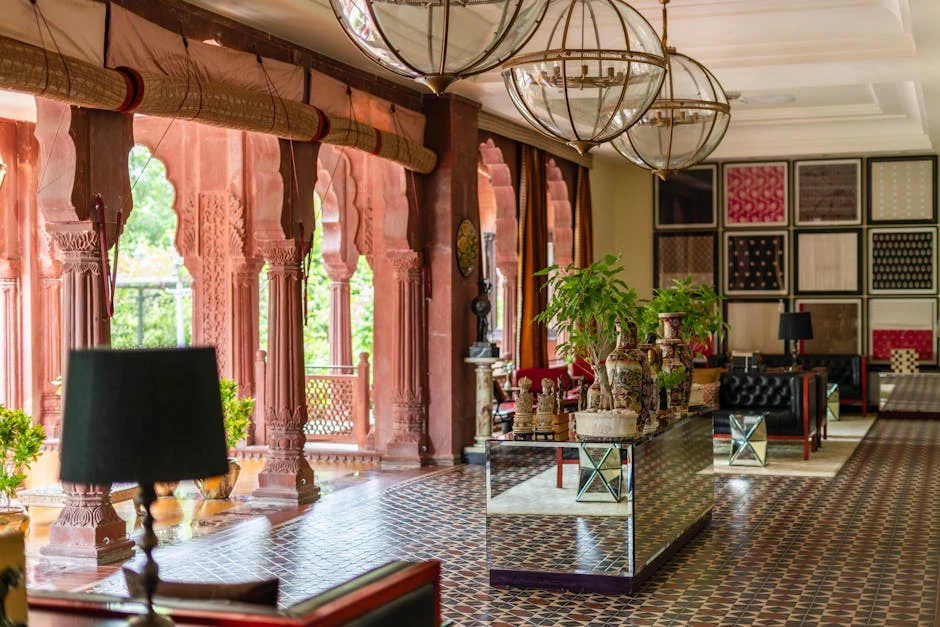
Featured A — Paradise City Resort Complex (5 minutes from airport)
Paradise City is Korea's largest integrated resort, sitting at 186 Yeongjonghaeannam-ro 321beon-gil in Jung-gu, Incheon, approximately 5 minutes from the airport by complimentary shuttle running every 15 to 20 minutes. The complex includes a foreigner-only casino operating 24 hours (free entry, minimum bets from KRW 5,000 / USD 3.50), the Wonderbox entertainment plaza (11:00 to 22:00, KRW 25,000 to 40,000 / USD 18 to 29), Cimer water spa (09:00 to 22:00, KRW 50,000 to 80,000 / USD 36 to 57), Plaza retail and dining concourse, and the Paradise City Hotel. The framework operates under Korean foreign-tourist gaming regulation, which permits passport-holder access for non-Korean nationals only — a regulatory carve-out structurally comparable to the foreign-tourist zones in Macau pre-2002, with substantially tighter modern compliance.
A practical Mexican or Colombian traveler read: the cluster operates on a logic the Panama City regenerative-medicine zone and the Bogotá casino corridor still have not matched. Airport shuttle integration runs at 15-to-20-minute intervals both directions, the secure perimeter exit-and-return timing is bonded for layover travelers, and the contemporary art collection — Yayoi Kusama, Damien Hirst, and others — operates at world-class museum quality with free Plaza viewing. Compare this to the equivalent Tijuana entertainment district, where the cross-border drive eats 90 minutes of any visit window. A non-gaming traveler can complete a Wonderbox-plus-Plaza-plus-Cimer-spa sequence in roughly 4 to 5 hours without entering the casino floor at all.
The Cimer water spa deserves a separate paragraph for medical-tourism column readers. The facility runs European-grade thermal bath programming — indoor and outdoor pools, sauna circuits, salt rooms — at a per-person rate that sits within 25 percent of the equivalent Polanco day-spa pricing while offering substantially broader thermal-circuit programming. The Plaza concourse dining tier covers Korean barbecue, ramen, Japanese izakaya, and Western fine-dining at price points calibrated for transit travelers rather than resort-captive markup pricing. The Wonderbox programming rotates monthly with live performance, immersive installations, and Korean pop-culture experiences — a Latin American traveler accustomed to the entertainment-and-art logic of the Soumaya Museum in Polanco will recognize the curatorial framework immediately, with the added accessibility of the integrated shuttle.
Address: 186 Yeongjonghaeannam-ro 321beon-gil, Jung-gu, Incheon. Hours: casino 24 hours; Wonderbox 11:00 to 22:00; Cimer 09:00 to 22:00. Price range: casino free entry, bets from KRW 5,000 (USD 3.50); Cimer KRW 50,000 to 80,000 (USD 36 to 57); Wonderbox KRW 25,000 to 40,000 (USD 18 to 29). Language support: English, Korean, Japanese, Chinese, and Russian. Verify through the p-city.com/eng official page in advance for current programming. A traveler with a 4-to-8-hour window beyond the perimeter, a passport from outside Korea, and an interest in entertainment-plus-dining-plus-spa will find this the corridor's most amenity-rich single building — and the price differential against equivalent Polanco resort programming runs roughly 40 to 60 percent below USD-quoted Mexican luxury pricing on a per-hour basis.
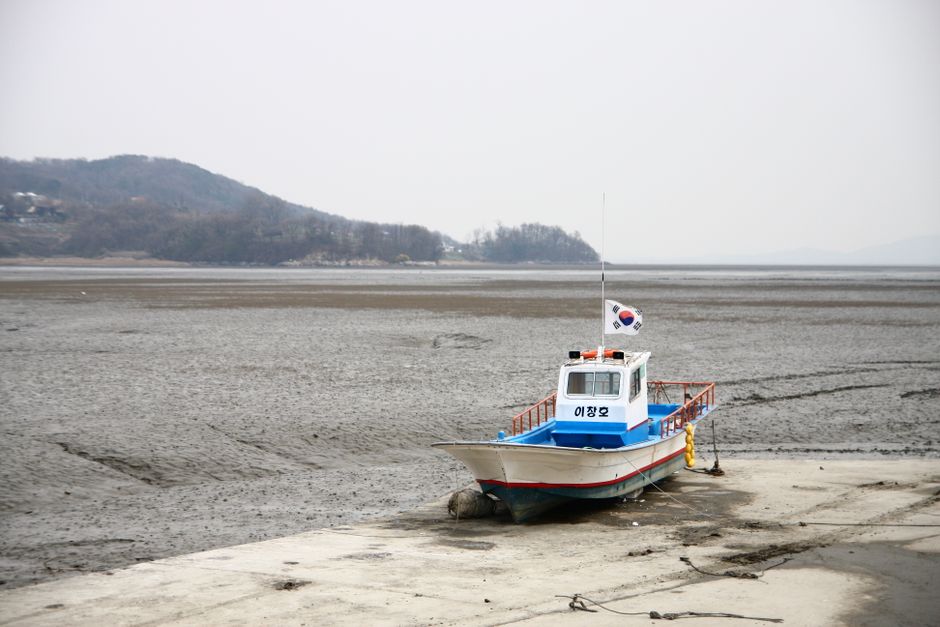
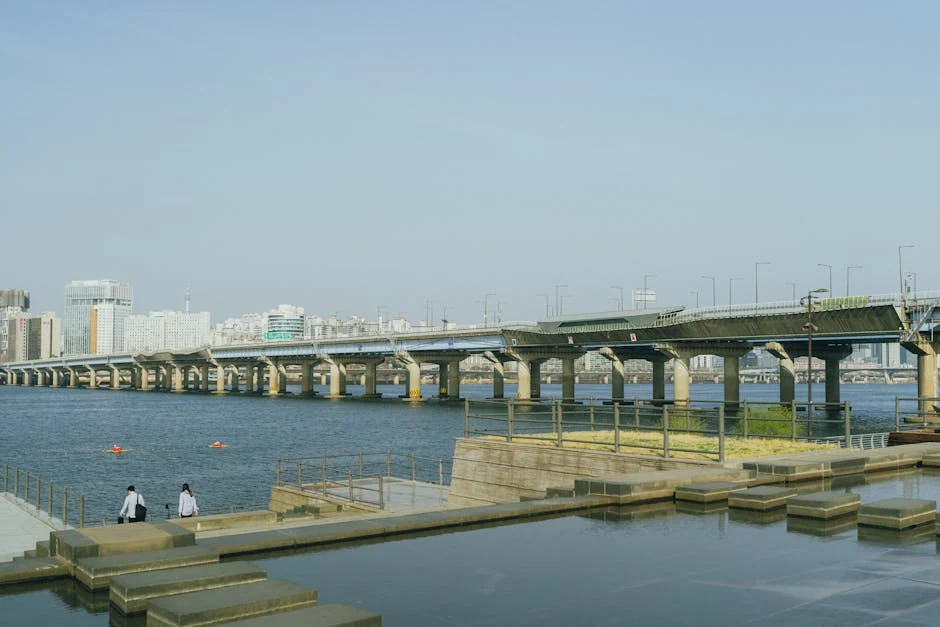
Featured B — Eulwangni Beach (sunset window across the Yellow Sea)
Eulwangni Beach sits in Eulwang-dong, Jung-gu, Incheon, on the Yongyu-do peninsula approximately 20 minutes from the airport by taxi or local bus, with free public access and a wide tidal flat that catches the late-afternoon and evening light across the Yellow Sea. The beach operates 24 hours (no closing gate), with rentals and umbrella service variable by season. The official swimming season runs July through August, but the framework as a sunset and coastal-walking destination runs year-round.
The value-to-spec ratio for a traveler with an afternoon or evening window beyond the perimeter is the sunset itself. The Yellow Sea geometry produces a wider and slower sunset window than the Pacific coast at Polanco or the Caribbean coast at Cartagena — roughly 40 to 60 minutes of usable warm light from the time the sun reaches the cloud line. The beach is calibrated specifically for that window, with cafes, sashimi-house restaurants, and small shops oriented westward. Compare this to the equivalent Mexico City sunset framework at Lake Xochimilco or the Tijuana coastal corridor at Rosarito — neither operates at the same distance-from-airport or with the same dedicated west-coast geometry.
The tidal flat itself merits a closer read. The Yellow Sea has one of the largest tidal ranges in the Asia-Pacific region — roughly 7 to 9 meters at peak — which produces a wide low-tide flat that extends 200 to 300 meters beyond the high-water line. A traveler walking the flat at low tide can find small crabs, clams, and the occasional starfish at no extra cost beyond the taxi fare. The framework reads more like a coastal nature walk than a beach resort, and the local population uses the flat as a recreational space rather than a strict swimming beach. Compare this to the Cartagena coastal experience, which is calibrated for swimming and beach-bar pricing rather than tidal-flat walking, and the Eulwangni framework reads as a complementary alternative for travelers who want the coastal hour without the resort pricing.
Address: Eulwang-dong, Jung-gu, Incheon. Hours: open 24 hours; swimming season July to August. Price range: free entry; rentals variable. Language support: Korean primary, with English signage at main beach access points. Cell coverage and ride-hailing apps both work cleanly throughout the area. A traveler with a 4-to-8-hour window landing in the early afternoon — particularly one off a long-haul flight from LAX or MEX — will find this the most visually rewarding option on the Yeongjong-do list. Pair the beach hour with a sashimi meal at the adjacent restaurant alley (covered separately below) and the trip reads more like a small coastal weekend than an airport-host visit.

Featured C — Muui-do Island via Muuidaegyo bridge (30 minutes from airport)
Muui-do is the coastal island sitting approximately 30 minutes from the airport by taxi or local bus, in Muui-dong, Jung-gu, Incheon, connected to the Yeongjong-do mainland by the Muuidaegyo bridge since 2019 (the previous ferry service has been replaced). The island includes Hanagae Beach (parking KRW 5,000 / USD 3.50), the Muuidaegyo cable car running coastal viewpoint loops (KRW 13,000 to 22,000 / USD 9 to 16), and a small grid of seafood restaurants serving the resident and visitor population. There is no entry fee for the island itself.
For a transit traveler calibrating a 6-to-8-hour window, Muui-do offers the corridor's most scenic coastal trip beyond the immediate Eulwangni perimeter. The framework is similar in spirit to the Tijuana-to-Rosarito coastal corridor, but the timing math is substantially tighter: a Muui-do round trip including beach time, cable car loop, and a seafood lunch fits inside a 6-hour window, where the equivalent Tijuana-Rosarito sequence typically needs 8 to 9 hours including the CBP return queue. The 2019 bridge replaced the old ferry queue, which previously absorbed 45 to 90 minutes per direction during peak weekends.
Address: Muui-dong, Jung-gu, Incheon (via Muuidaegyo bridge). Hours: all day; bridge-connected since 2019. Price range: free for the island itself; Hanagae Beach parking KRW 5,000 (USD 3.50); cable car KRW 13,000 to 22,000 (USD 9 to 16). Language support: Korean primary, with English signage at the main attractions. A traveler with a 6-to-8-hour window who wants a real coastal island hour rather than a casino-or-terminal experience will find this the most genuinely off-airport option in the corridor. Total cost per person — taxi both directions plus cable car plus a seafood lunch — runs roughly KRW 60,000 to 100,000 (USD 43 to 71), which sits within 15 percent of an equivalent Polanco-to-Tepoztlan day-trip on a per-hour basis.

Featured D — Yongyu Sky Bike and Rail Park (coastal rail-bike experience)
The Yongyu Sky Bike facility sits at 55 Yongyu-ro in Jung-gu, Incheon, on the Yongyu-do peninsula adjacent to the airport, with a pedal-powered rail-bike experience running roughly KRW 20,000 to 30,000 per ride (USD 14 to 21) and operating hours from 10:00 to 18:00 with seasonal variation. The framework is a coastal rail track converted to a tourist rail-bike attraction — riders pedal small four-seat carts along the rail line with Yellow Sea views to one side and the Yongyu peninsula coastline to the other.
A practical traveler read: the Sky Bike pairs naturally with the Eulwangni sunset window. A passenger with an 8-hour-plus layover landing in the early afternoon can taxi to Eulwangni in 20 minutes, complete a Sky Bike loop in 60 to 90 minutes (including the cart queue during peak weekends), walk the Eulwangni tidal flat for an hour, watch the Yellow Sea sunset, and return to the airport for an evening flight. Compare this to the equivalent unusual-transport experiences at Bogotá's Salto del Tequendaño or Mexico City's trajinera boats at Xochimilco — both require substantially longer ground-transport windows from their respective airports and neither is calibrated for transit travelers.
Address: 55 Yongyu-ro, Jung-gu, Incheon (Yongyu-do peninsula). Hours: 10:00 to 18:00 daily (varies seasonally). Price range: sky bike KRW 20,000 to 30,000 per session (USD 14 to 21). Language support: Korean primary, with English signage at main attractions. A traveler with an 8-plus-hour window and a connecting flight after 21:00 will find this the most photographically rewarding option in the corridor — and the only one calibrated specifically around the coastal rail experience rather than a casino floor or beach walk. The framework reads more like a small coastal town attraction than an airport-host activity.
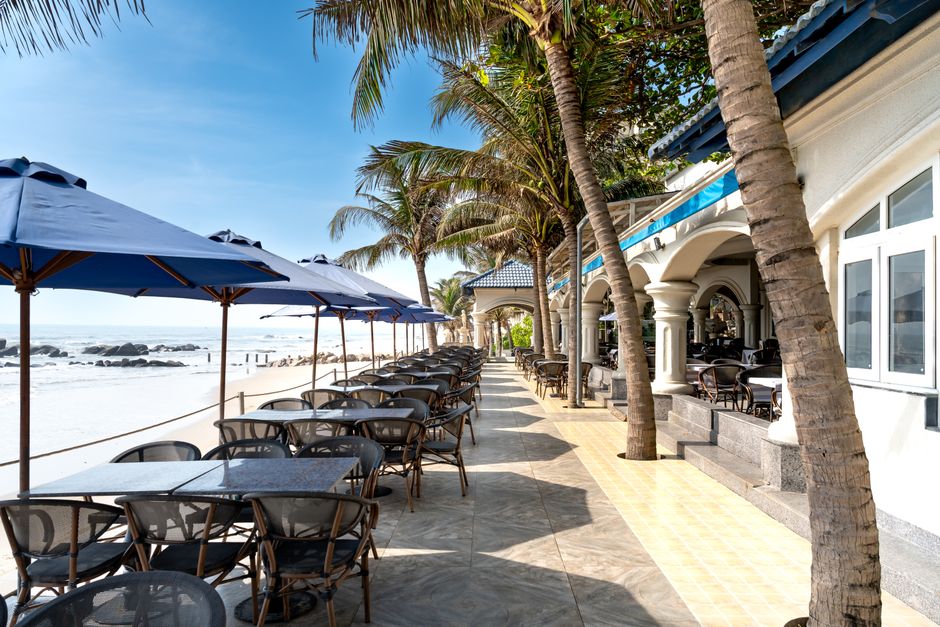

Featured E — Eulwangni Hwetjip Alley and local shopping cluster
The Eulwangni Hwetjip Alley is the sashimi-and-raw-clam restaurant cluster running along the beachfront in Eulwang-dong, Jung-gu, Incheon, with most establishments operating 11:00 to 22:00 and per-person pricing of KRW 40,000 to 100,000 (USD 29 to 71) depending on the catch and the order size. The alley specializes in west-coast Yellow Sea seafood — sashimi platters, grilled clam tables, raw fish set menus — facing directly onto the beach with sunset window viewing. Language support is Korean primary, with English menus at the larger establishments.
For a traveler pairing the alley with the broader Yeongjong-do day, there is also a separate local shopping cluster at the Yeongjongdo-dong area — the Triplex Yeongjong commercial complex plus a Lotte Mart location (10:00 to 23:00) — which offers an everyday-Korea retail experience as an alternative to the airport duty-free environment. The framework provides affordable bulk K-snack pickup, Korean grocery items, and basic household goods at city-supermarket pricing rather than airport-margin pricing. Compare the sashimi-alley pricing math against the equivalent Polanco fish-market or Bogotá Plaza de Mercado de Paloquemao seafood pricing — the Eulwangni alley runs roughly 30 to 50 percent below USD-quoted LATAM equivalents on raw fish and clam pricing per person.
The operational logic of the sashimi alley deserves a closer read for transit travelers. Most establishments operate on a market-rate model — a passenger selects fish from a live tank or display case, the rate is quoted per kilogram or per fish, and the kitchen prepares the catch as sashimi (raw), maeuntang (spicy stew from the bones), or grill (for clams and shellfish). The framework is structurally similar to the Tsukiji outer-market dining experience in Tokyo, but the pricing math runs roughly 25 to 40 percent below USD-quoted Tokyo equivalents on equivalent grade fish. A traveler with no Korean language capability can usually navigate the menu by pointing to the live display, and the larger establishments along the main alley publish English-language menus with photographs. The framework reads more accessibly than the equivalent Mexico City Mercado de San Juan seafood corridor, which assumes Spanish-language transaction capability throughout.
Address: Eulwang-dong, Jung-gu, Incheon (along the beachfront for the sashimi alley); Yeongjongdo-dong area for the Triplex and Lotte Mart cluster. Hours: most sashimi restaurants 11:00 to 22:00; Lotte Mart 10:00 to 23:00. Price range: sashimi alley KRW 40,000 to 100,000 per person (USD 29 to 71); supermarket variable retail pricing. Language support: Korean primary, with English menus at larger sashimi restaurants and bilingual signage at Lotte Mart. A traveler pairing a beach hour, a sashimi dinner, and a quick supermarket stop will absorb roughly 3 to 4 hours of the window beyond the perimeter, with a per-person cost in the KRW 50,000 to 110,000 (USD 36 to 79) range — meaningfully below an equivalent Polanco evening-out on a per-hour basis.
How the five attractions compare across distance, window, and amenity axes
A categorical comparison of the five Yeongjong-do attractions against four working axes — distance from airport, recommended window length, headline amenity category, and price range per person. Not ranked.
| Attraction | Distance from airport | Recommended window | Headline amenity | Price range per person |
|---|---|---|---|---|
| Paradise City Resort Complex | 5 minutes by shuttle | 4 to 8 hours | Casino, spa, art, dining | Free entry to KRW 80,000 (USD 57) |
| Eulwangni Beach | 20 minutes by taxi | 2 to 4 hours | Sunset and coastal walking | Free |
| Muui-do via Muuidaegyo bridge | 30 minutes by taxi | 6 to 8 hours | Coastal island and cable car | KRW 25,000 to 50,000 (USD 18 to 36) |
| Yongyu Sky Bike and Rail Park | 25 minutes by taxi | 3 to 5 hours | Coastal rail-bike experience | KRW 20,000 to 30,000 (USD 14 to 21) |
| Eulwangni Hwetjip Alley and shopping | 20 to 25 minutes by taxi | 3 to 4 hours | Sashimi and local retail | KRW 50,000 to 110,000 (USD 36 to 79) |
How this column reads Yeongjong-do beyond the airport
This shortlist reflects six months of Yeongjong-do corridor field reporting by a Mexico City medical-tourism column desk — structured logistics tests across multiple Spanish-language, English-language, and Japanese-language traveler profiles, review of the Visit Korea and Incheon Tourism Organization published frameworks, and cross-checks against the airport authority's nearby-attractions tables. A note on inclusion and exclusion: the Sky 72 Golf Club, formerly one of Asia's largest golf complexes on Yeongjong-do, is in redevelopment status from 2023 onward and is not included in this list — travelers verifying older guidebooks should check current operational status before any visit. The five attractions covered above are confirmed operational as of late 2026.
A secondary historical note for travelers cross-referencing older Korean-language and Japanese-language guidebooks: the Yeongjong-do corridor has been in continuous programming evolution since the airport opened in 2001, with the Paradise City complex (opened 2017), the Muuidaegyo bridge (opened 2019), and the broader Yongyu peninsula development representing the most recent infrastructure waves. Older references to the Yongyu Stop Maglev Train (terminated 2023) and the Sky 72 Golf Club (redevelopment from 2023) reflect the corridor as it operated in the 2010s rather than the current configuration. A traveler holding a 2018 or 2019 guidebook should treat older Maglev or Sky 72 references as no longer operational and focus on the five attractions confirmed above.
The framework is portable. A version of this five-attraction read could in theory be built for Bangkok Suvarnabhumi's host neighborhood, Singapore Changi's Jewel terminal corridor, or even Mexico City MIA — but in practice the Yeongjong-do corridor offers a meaningfully tighter combination of casino-resort, beach, island, scenic transport, and dining options than any equivalent airport-host island in the Asia-Pacific region. Compare this to the Tijuana CBX framework: the cross-border timing eats most of any usable window, the airport-host neighborhood is essentially industrial and cargo-oriented, and the closest equivalent of Paradise City sits 40 minutes from the secure perimeter under substantially looser regulatory oversight. The Incheon Airport secure perimeter releases its passengers to a real coastal corridor on a predictable bonded schedule — that single regulatory bridge is what earns the Yeongjong-do area its consistent Visit Korea and Conde Nast Traveler coverage. The list will be revised quarterly as the corridor programming changes.
“Yeongjong-do operates the corridor LATAM and North American airport-host neighborhoods have been quietly studying for a decade — five-minute shuttle to a foreign-tourist casino resort, 20-minute taxi to a west-coast tidal beach with a dedicated sunset window, 30-minute bridge to a coastal island that absorbed its old ferry queue into the road network, and a sashimi alley running 30 to 50 percent below Polanco fish-market pricing, all on a published bonded schedule that no equivalent host island in the Asia-Pacific region has matched.”
Sofia Vargas, medical tourism column
Frequently asked questions
How far is Paradise City Resort from Incheon Airport?
Approximately 5 minutes by complimentary shuttle, running every 15 to 20 minutes from T1 and T2. The complex sits at 186 Yeongjonghaeannam-ro 321beon-gil in Jung-gu, Incheon, and the shuttle service is bonded for layover passengers with secure-perimeter exit-and-return timing built in. A traveler with a 4-to-8-hour window beyond the perimeter and a passport from outside Korea can complete a Wonderbox-plus-Plaza-plus-Cimer-spa sequence in roughly 4 to 5 hours without entering the casino floor at all.
Can a traveler reach Eulwangni Beach by public transit from the airport?
Yes, by local bus 202 or 203 from the T1 and T2 bus bays in roughly 30 to 40 minutes at KRW 1,400 (USD 1) fare, or by taxi in roughly 20 minutes at KRW 18,000 to 25,000 (USD 13 to 18). The framework is meaningfully cleaner than the equivalent Tijuana-to-Rosarito coastal corridor, where the cross-border drive plus the CBP return queue typically eats 2 hours before reaching the coast. Eulwangni Beach itself has free public access 24 hours.
Is Muui-do still ferry-accessed or is the bridge now operational?
The Muuidaegyo bridge has been operational since 2019, and the previous ferry service has been replaced. A traveler taking a taxi from the airport reaches Muui-do in roughly 30 minutes for KRW 25,000 to 35,000 (USD 18 to 25) one-way. The bridge replaced a ferry queue that previously absorbed 45 to 90 minutes per direction during peak weekends — the framework now reads as a clean road trip rather than a ferry-dependent visit.
What is the best Yeongjong-do attraction for a 4-hour window beyond the airport perimeter?
Paradise City Resort Complex, at 5 minutes by shuttle. A 4-hour window covers a complete shuttle-Wonderbox-Plaza-dining-shuttle sequence without entering the casino floor, at a per-person cost of roughly KRW 40,000 to 80,000 (USD 29 to 57). Compare the per-hour value against an equivalent Polanco entertainment-plus-dining evening — the Paradise City framework runs roughly 40 to 60 percent below USD-quoted Mexican luxury pricing.
How does the Eulwangni sashimi alley pricing compare to LATAM seafood districts?
Per-person sashimi alley pricing runs KRW 40,000 to 100,000 (USD 29 to 71) depending on the catch and order size. The math runs roughly 30 to 50 percent below equivalent Polanco fish-market or Bogotá Paloquemao seafood pricing per person, with the added west-coast Yellow Sea sunset window that no LATAM seafood district duplicates. The framework reads more like a small coastal-town dining experience than an airport-host restaurant.
Is the Sky 72 Golf Club currently operational?
The Sky 72 Golf Club, formerly one of Asia's largest golf complexes on Yeongjong-do, is in redevelopment status from 2023 onward. Travelers verifying older guidebooks should check current operational status before any visit. The five attractions in this guide — Paradise City, Eulwangni Beach, Muui-do, Yongyu Sky Bike, and the Eulwangni sashimi alley and shopping cluster — are confirmed operational as of late 2026.
What language support is available across Yeongjong-do attractions?
Paradise City operates with full English, Korean, Japanese, Chinese, and Russian support across the casino, Wonderbox, Cimer, and Plaza concourse. Eulwangni Beach and the sashimi alley run Korean-primary with English signage and English menus at larger establishments. Muui-do and Yongyu Sky Bike sit on the lower end with Korean primary plus English signage. A traveler from Polanco accustomed to Mexican-Spanish service standards will find the Paradise City multilingual coverage substantially broader than at Mexico City MIA.
Can a traveler combine multiple Yeongjong-do attractions in one day?
Yes, with an 8-to-12-hour window beyond the perimeter. A practical combination: Paradise City for a 3-hour entertainment-and-dining block, taxi to Eulwangni Beach for a 2-hour walk-and-sashimi sequence including the sunset window, and the Yongyu Sky Bike for a 90-minute coastal rail loop if the timing allows. Total cost roughly KRW 100,000 to 180,000 per person (USD 71 to 129), which sits within 15 percent of an equivalent Polanco-to-Tepoztlan full day-trip on a per-hour basis.