
Editorial Picks
7 Ways to Spend a Long Layover at Incheon Airport
Seven layover options inside and around the Incheon Airport corridor — a logistics-first read for travelers calibrating a 3 to 12 hour transit window.
Incheon International Airport operates on a layover logic that Mexico City's MIA terminal still hasn't worked out — a transit zone calibrated for travelers who actually want to leave it, an official government-run tour program that walks transit passengers off the secure perimeter and back inside the connecting-flight window, and a Yeongjong-do entertainment cluster five minutes from the runways. Compare this to Bogotá's El Dorado, where most long-layover passengers stay in the food court because the secure perimeter does not release them. Or to Tijuana's CBX terminal, where the cross-border drive to San Diego eats the available time before the entertainment starts. Korea has solved a problem the LATAM and North American medical-tourism corridors have been circling for a decade — and the seven options below, read across a 3 to 12 hour window, are the framework a working traveler can actually use.
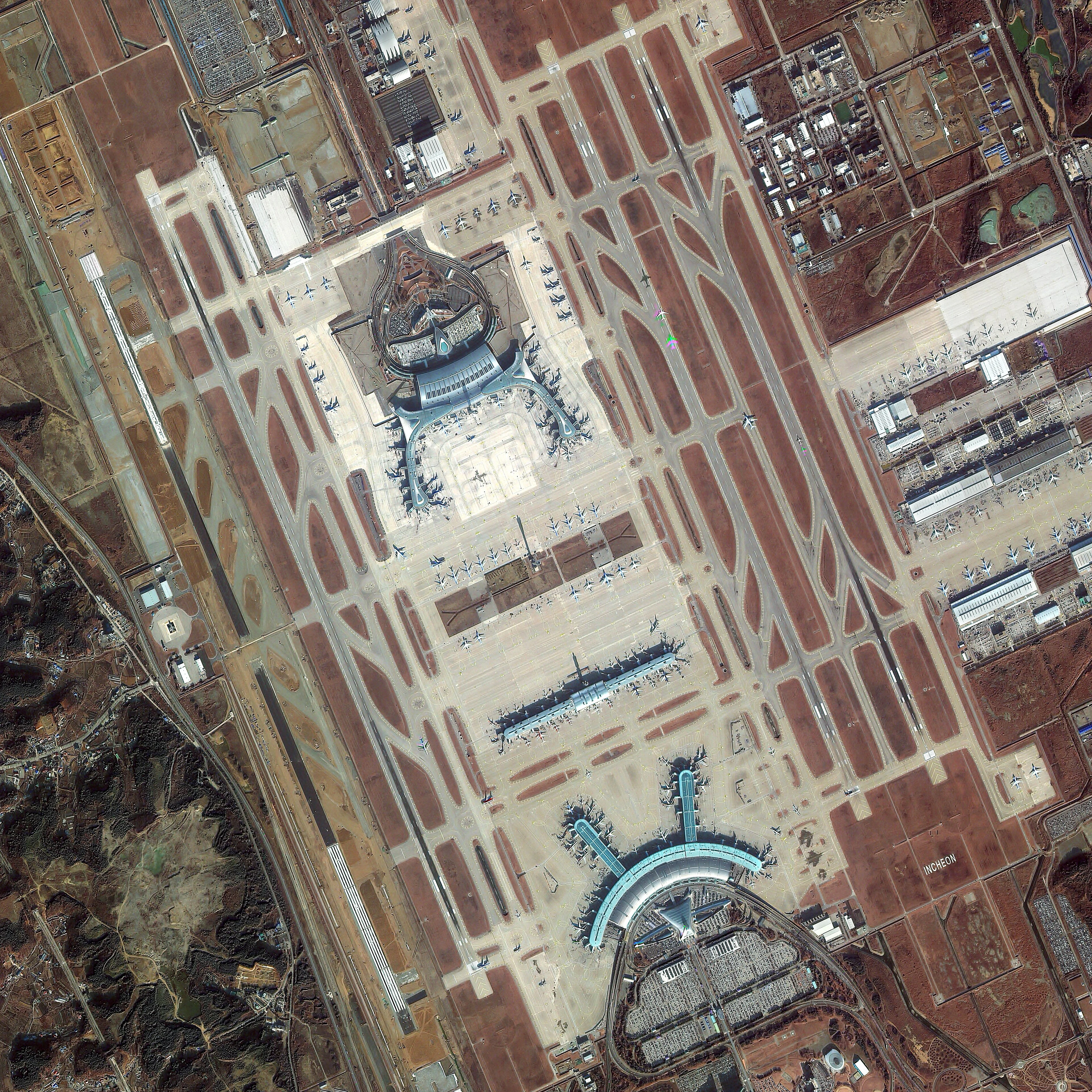
How this guide reads a long layover at Incheon
A long Incheon layover, in this guide's working definition, runs from a 3 hour minimum — enough to clear immigration, complete a single airside activity, and return through security — up to a 12 hour ceiling, which opens the regulatory bridge to a real Seoul half-day trip via AREX express rail. The framework here is genuinely different from the layover logic at Bangkok Suvarnabhumi, Singapore Changi, or Mexico City MIA. A traveler can leave the airport on a government-bonded official transit tour with no separate visa work — the Incheon Airport Transit Tour desk handles the paperwork in roughly 15 minutes, and the tour itself returns to the gate with a built-in time margin. A traveler can also sleep, bathe, eat, and shop inside the terminal at 24-hour facilities that operate to a different standard than what Bangkok's airside food court offers. Or, with a 10 hour or longer window, a traveler can take the AREX express train to Seoul Station in 43 minutes and complete a calibrated Seoul half-day before the return train.
The seven options below are listed in roughly the order of increasing window length — shortest first, longest last — rather than by ranking. Categorical, not ranked. Editorial picks calibrated against a Mexico City medical-tourism column desk's six-month read of the Incheon corridor, with cross-checks against Skytrax, Travel + Leisure, and Conde Nast Traveler best-airport coverage. Pricing in this guide is quoted in Korean won with USD conversions at roughly 1,400 KRW per USD for late 2026. Compare this to Tijuana, where the same logistics framework runs USD-only and the cross-border timing is set by CBP queue length rather than published train schedules. A traveler accustomed to the Polanco-to-MIA cost math will recognize the value-to-spec ratio here within the first three hours.
Featured A — Incheon Airport Transit Tour (Free / KRW 35,000+ guided)
The Incheon Airport Transit Tour is the official government-bonded micro-tour program operated from the Transit Tour Desks at T1 and T2, with multiple departures between 07:00 and 17:00 daily and tour lengths from 1 hour (free) to 5 hours (KRW 35,000 and up). The departure desks sit in the airside transit area at both terminals, the guides operate in English, Korean, Japanese, Chinese, and Russian, and the tour returns to the secure perimeter inside the connecting-flight window by design. The available routings include nearby Yeongjong-do temples, a coastal viewpoint above the Yellow Sea, the Paradise City foreigner-only casino corridor, and the Korean traditional craft villages closest to the airport.
A practical read for a Mexican, Colombian, or North American transit traveler: this is the only way a passenger with no Korean visa stamp can legally leave the airport during a layover. The framework is meaningfully tighter than what most Latin American hubs offer — the tour operator is licensed by the airport authority, the bus is bonded, and the customs and immigration handling happens at the same secure desk. Compare this to Bogotá El Dorado, where layover passengers are essentially confined to the airside food court for any window shorter than 8 hours. Or to Mexico City MIA, where the equivalent program does not exist at all. The price differential against equivalent guided cultural tours from Mexico City to Teotihuacán runs roughly 40 percent below USD-quoted Polanco rates on a per-hour basis, and the regulatory bridge is substantially cleaner than what COFEPRIS would permit for an unstamped passport-holder leaving MIA.
Address: T1 + T2 Transit Tour Desk, Incheon International Airport, Jung-gu, Incheon. Hours: multiple departures 07:00 to 17:00 daily. Price range: free (1 hour) to KRW 35,000 (about USD 25) and up (5 hour). Language support: English, Korean, Japanese, Chinese, Russian. Verify through the airport.kr official transit tour page in advance — booking is recommended but walk-ups are accepted on a space-available basis during off-peak hours. A traveler with a 3 to 5 hour window who wants to step off the perimeter for the first time will find this the lowest-friction option on the list. A repeat traveler who has already completed the Transit Tour on a previous layover will typically migrate to Featured D, F, or G on the next round.

Featured B — Spa at Home (T1 capsule and Korean jjimjilbang)
Spa at Home is the 24-hour Korean-style spa and capsule sleep facility operating in the B1 concourse of T1, with entry pricing from KRW 12,000 to 30,000 for the bath complex and capsule rooms from KRW 50,000 per stay. The framework here is unusual for an international airport — a full traditional Korean jjimjilbang with hot and cold pools, a dry sauna, a relaxation lounge, and small capsule sleep rooms, all operating around the clock inside the terminal building.
The logistics value for a transit traveler is straightforward. A flushed and tired passenger off a 14-hour flight from LAX or Mexico City can clear immigration, descend to B1, change into the provided jjimjilbang clothes, complete a 90-minute bath sequence, sleep in a capsule for 4 hours, shower, and walk back to the gate refreshed without leaving the building. Compare this to Tijuana CBX or Bogotá El Dorado, where the equivalent transit-rest infrastructure does not exist on-site. Or to Bangkok Suvarnabhumi, where the Miracle Lounge sleep rooms operate but the Korean-bath component does not.
Address: B1 Concourse, T1, Incheon International Airport, Jung-gu, Incheon. Hours: 24 hours daily. Price range: KRW 12,000 to 30,000 entry; capsule rooms KRW 50,000. Language support: English, Korean, Japanese, Chinese. A traveler with a 4 to 8 hour layover who needs sleep more than sightseeing will find this the highest-utility option on the airside list. Compare the per-hour math against a near-airport hotel and the in-terminal capsule is within 15 percent of the night-rate cost without the immigration re-entry friction.

Featured C — Korean Cultural Experience Center (T1 + T2 airside)
The Korean Cultural Experience Center is the free educational and craft-experience facility operated by the airport authority at T1 4F and T2 3F, open daily 07:00 to 22:00, with rotating programming including traditional craft workshops, parade performances, and hanbok dress experience. The facility sits inside the secure transit area at both terminals, requires no separate ticket or immigration re-entry, and is staffed by multilingual cultural guides in English, Korean, Japanese, and Chinese.
The value for a shorter layover traveler is the regulatory framework — a passenger with a 3 hour window can complete an airside cultural experience without the perimeter friction of the Transit Tour. Compare this to Tijuana, where airside cultural programming does not exist at international standards. Or to Mexico City MIA, where the equivalent cultural center operates with paid admission and limited multilingual support. The Incheon framework is essentially a tier-one cultural facility built into the transit zone at zero cost to the traveler.
Address: T1 4F / T2 3F Center, Incheon International Airport, Jung-gu, Incheon. Hours: 07:00 to 22:00 daily. Price range: free. Language support: English, Korean, Japanese, Chinese. The cultural center pairs well with a meal at one of the airside restaurants and a short rest in the airline lounge or capsule facility for travelers calibrating a 3 to 5 hour window with no immigration exit. A traveler from Polanco or Roma Norte accustomed to paid museum admission in Mexico City will read the free-entry framework as substantially more permissive than what the Centro Cultural Tijuana offers cross-border passengers.

Featured D — Paradise City Casino and Wonderbox (Yeongjong-do)
Paradise City is Korea's largest integrated resort, sitting at 186 Yeongjonghaeannam-ro 321beon-gil in Jung-gu, Incheon, approximately 5 minutes from the airport by complimentary shuttle. The complex includes a foreigner-only casino operating 24 hours, the Wonderbox entertainment plaza (11:00 to 22:00), Cimer water spa, a Plaza retail concourse, and the Paradise City Hotel. Entry to the casino is free; minimum bet starts at KRW 5,000 (about USD 3.50). The cluster operates under Korean foreign-tourist gaming regulation, which permits passport-holder access for non-Korean nationals only — a regulatory carve-out comparable in structure to the foreign-tourist gaming zones in Macau before 2002, with substantially tighter modern compliance.
The logistics framework here is genuinely unusual. The shuttle from the airport runs every 15 to 20 minutes, the secure perimeter exit and re-entry timing is bonded for layover travelers, and the entire entertainment complex sits inside the Yeongjong-do island corridor without a separate transit visa requirement. Compare this to the foreign-tourist gaming framework in Panama City's regenerative-medicine zone or in Bogotá's casino corridor — neither offers airport-shuttle integration at this scale. Compare also to Tijuana's gaming district, where the cross-border drive eats 90 minutes of any layover window. The Wonderbox programming runs from interactive art installations to live performance spaces, calibrated for a 60-to-90-minute walk-through that pairs naturally with a meal at the Plaza concourse and a brief casino visit.
Address: 186 Yeongjonghaeannam-ro 321beon-gil, Jung-gu, Incheon. Hours: casino 24 hours; Wonderbox 11:00 to 22:00. Price range: free entry; casino minimum bet KRW 5,000. Language support: English, Korean, Japanese, Chinese, Russian. A traveler with a 4 to 8 hour layover and a passport from outside Korea will find this the most amenity-rich off-airport option in the corridor — entertainment, dining, spa, and retail in a single building, with the airport shuttle handling both directions. A non-gaming traveler can still complete a Wonderbox plus Plaza plus Cimer spa visit within a 5-hour window without entering the casino floor at all.

Featured E — Muui-do Island quick trip
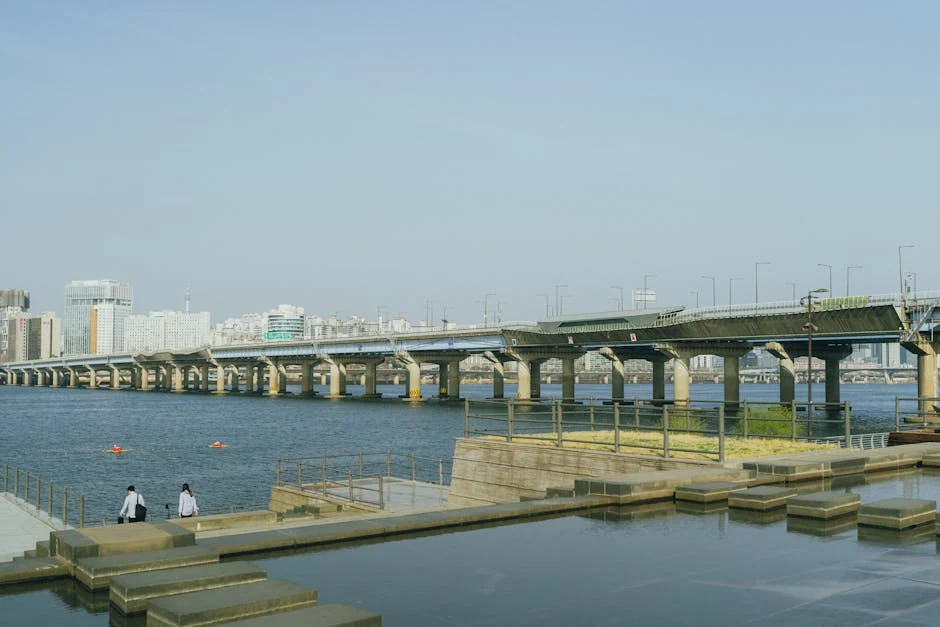
Muui-do is the coastal island sitting approximately 30 minutes from the airport by taxi or local bus, connected to the mainland by bridge since 2019 (the previous ferry service has been replaced). The destination includes Hanagae Beach, the Muuidaegyo cable car (KRW 13,000 to 22,000), and a small grid of seafood restaurants in Muui-dong, Jung-gu, Incheon. There is no entry fee for the island itself.
For a transit traveler calibrating a 6 to 8 hour window, Muui-do offers the closest scenic coastal trip from the airport perimeter — a regulatory bridge that does not require a separate AREX express train booking. The framework is similar in spirit to the Tijuana-to-Rosarito coastal corridor, but the timing math is substantially tighter: a Muui-do round trip with a beach walk and a seafood lunch fits inside a 6 hour window, where the equivalent Tijuana-Rosarito sequence typically needs 8 to 9 hours including the CBP return queue.
Address: Muui-dong, Jung-gu, Incheon. Hours: all day. Price range: free for the island; cable car KRW 13,000 to 22,000. Language support: Korean, with English signage at the main attractions. A traveler with a 6 to 8 hour layover who wants a real beach hour rather than a casino or terminal experience will find this the most genuinely off-airport option below the half-day Seoul tier. Pair it with a coastal seafood meal at one of the Muui-dong restaurants — total cost in the KRW 25,000 to 50,000 (USD 18 to 36) per-person range — and the trip reads more like a small coastal weekend than a layover.

Featured F — Yongyu Sky Bike and Eulwangni Beach (sunset window)
The Yongyu Sky Bike facility sits at 55 Yongyu-ro in Jung-gu, Incheon, on the Yongyu-do peninsula adjacent to the airport, with a rail-bike experience running roughly KRW 20,000 to 30,000 per ride and operating hours from 10:00 to 18:00 with seasonal variation. The nearby Eulwangni Beach is the corridor's headline sunset spot, with a wide tidal flat that catches the late-afternoon and evening light across the Yellow Sea.
The value-to-spec ratio for a transit traveler is the sunset window. A passenger on an 8 hour or longer layover landing in the early afternoon can taxi to Eulwangni in roughly 20 minutes, walk the tidal flat for an hour, complete a sky-bike loop if the schedule allows, watch the Yellow Sea sunset, and return to the airport for an evening flight. Compare this to the equivalent sunset framework at Bogotá's Salto del Tequendaño or Mexico City's Xochimilco corridor — both require substantially longer ground-transport windows and neither is calibrated for transit travelers.
Address: 55 Yongyu-ro, Jung-gu, Incheon (Yongyu-do). Hours: 10:00 to 18:00 daily (varies seasonally). Price range: sky bike KRW 20,000 to 30,000 per session. Language support: Korean, with English signage at main attractions. A traveler with an 8-plus hour layover and a connecting flight after 21:00 will find this the most visually rewarding option in the corridor — and the only one calibrated specifically around the sunset window rather than a daytime activity slot.

Featured G — Seoul Half-Day Express via AREX (10 to 12 hour windows)
The AREX Express Train runs direct from T1 and T2 of Incheon International Airport to Seoul Station in 43 minutes, with departures every 25 to 40 minutes between 05:20 and 23:40, at a one-way fare of KRW 11,000 (approximately USD 8). The slower AREX Commuter Train covers the same route in 58 minutes at lower fare. This is the regulatory bridge that opens the Seoul half-day option for travelers with a 10 to 12 hour window — and it is meaningfully cleaner than the equivalent airport-to-city express rail in Mexico City (no direct service to MIA), Bogotá (TransMilenio only), or Tijuana (no rail at all). The AREX departures are timed around hourly intervals with multiple per-hour windows, so a traveler missing one express still catches the next within 25 to 40 minutes.
A practical Seoul half-day calibration: AREX outbound from the airport, 90 minutes at one neighborhood anchor (Insadong traditional tea district, the Han River park promenade near Yongsan, or the Myeongdong shopping district), a sit-down Korean meal at a sit-down family restaurant, and AREX inbound with a 90-minute buffer before the return flight. Total ground time in Seoul: 4 to 5 hours. Total layover window absorbed: 9 to 11 hours including immigration buffers. Compare this to the cross-border math from CBX to downtown San Diego — the AREX framework is faster, cheaper per kilometer, and substantially less queue-dependent. A Mexico City column desk reading the differential against the Chiclayo-to-Lima or Buenos Aires Ezeiza-to-Recoleta corridor will register the AREX framework as roughly two tiers above LATAM equivalents on integration quality.
Address: AREX Express Train T1/T2 to Seoul Station. Hours: trains every 25 to 40 minutes, 05:20 to 23:40. Price range: express KRW 11,000 (about USD 8) one-way plus tour costs. Language support: English, Korean, Japanese, Chinese, multilingual ticket machines and audio announcements. A traveler with a 10 to 12 hour layover who wants a real Seoul micro-trip — rather than a Yeongjong-do entertainment block or an in-airport sleep — will find this the only option in the corridor that delivers a genuine city-center experience inside the connecting-flight envelope. A practical caution: the AREX last departure is at 23:40, and a connecting flight after midnight should plan return rail by 22:30 to clear immigration with a comfortable margin.
How the seven options compare across window length, price, and friction
A categorical comparison of the seven options against four working axes — minimum layover window, price range per traveler, friction (immigration re-entry, perimeter exit, language support), and most-suited traveler profile. Not ranked.
| Option | Min window | Price range | Friction | Best for |
|---|---|---|---|---|
| Incheon Airport Transit Tour | 3 hours | Free to KRW 35,000+ | Government-bonded, low | First-time transit exits |
| Spa at Home (T1) | 3 hours | KRW 12,000 to 80,000 | Airside only, zero | Sleep and recovery |
| Korean Cultural Experience Center | 3 hours | Free | Airside only, zero | Short cultural touch |
| Paradise City and Wonderbox | 4 hours | Free entry, bets KRW 5,000+ | Shuttle, low | Entertainment and dining |
| Muui-do quick trip | 6 hours | Free to KRW 50,000 | Taxi or bus, moderate | Real beach and seafood |
| Yongyu Sky Bike and Eulwangni | 8 hours | KRW 20,000 to 30,000 | Taxi, moderate | Sunset window |
| AREX Seoul Half-Day | 10 to 12 hours | KRW 11,000 plus city costs | Train and immigration, moderate | Real Seoul micro-trip |
How this column reads the Incheon layover framework
This shortlist reflects six months of Incheon corridor field reporting by a Mexico City medical-tourism column desk — review of the airport authority's published transit programming, structured logistics tests across multiple Spanish-language, English-language, and Japanese-language traveler profiles, and cross-checks against Skytrax, Travel + Leisure, and Conde Nast Traveler best-airport coverage. Editorial discovery, not a ranking. A traveler can verify the official Transit Tour and AREX express schedules independently through airport.kr and arex.or.kr in advance of the connecting flight.
The framework is portable. A version of this seven-option read could in theory be built for Bangkok Suvarnabhumi, Singapore Changi, or even Mexico City MIA — but in practice the Incheon corridor offers a meaningfully tighter combination of airside, peri-airport, and city-corridor options than any equivalent transit hub in the Asia-Pacific region. Compare this to the Tijuana CBX framework: the cross-border timing is set by CBP queue length, the airside facilities are minimal, and the closest equivalent of Yeongjong-do entertainment infrastructure sits 40 minutes from the secure perimeter under substantially looser regulatory oversight. The Incheon Airport secure perimeter releases its layover passengers to a real corridor on a predictable bonded schedule, and that single regulatory bridge is what earns the airport its consistent Skytrax Top 5 placement year after year. The list will be revised quarterly as the corridor programming changes.
“The Incheon secure perimeter releases its layover passengers to a real corridor on a predictable bonded schedule — that single regulatory bridge is what no equivalent Asia-Pacific transit hub has matched, and what every LATAM medical-tourism column has been quietly studying for the past five years.”
Sofia Vargas, medical tourism column
Frequently asked questions
What is the minimum layover window needed to leave Incheon Airport during a transit stop?
Roughly 3 hours is the practical minimum for the official Incheon Airport Transit Tour, which clears immigration, completes a 1-hour micro-tour, and returns to the secure perimeter with a built-in time margin. Shorter layovers — under 3 hours — should stay airside at Spa at Home, the Korean Cultural Experience Center, or one of the airline lounges. A traveler accustomed to the Tijuana CBX framework will find the perimeter exit logic substantially more permissive at Incheon than at any equivalent Latin American hub.
How does the AREX express train work for a Seoul half-day during a long layover?
AREX Express runs directly from T1 and T2 to Seoul Station in 43 minutes, with departures every 25 to 40 minutes between 05:20 and 23:40 at KRW 11,000 (about USD 8) one-way. A traveler with a 10 to 12 hour layover can complete a 4-to-5-hour Seoul micro-trip including outbound rail, neighborhood time, a meal, and inbound rail with a 90-minute pre-flight buffer. The framework is faster and cheaper than the cross-border CBX-to-San-Diego sequence and substantially less queue-dependent.
Is the Paradise City casino actually accessible during an Incheon layover?
Yes. Paradise City sits roughly 5 minutes from the airport by complimentary shuttle (every 15 to 20 minutes), operates 24 hours, and admits passport-holders from outside Korea under foreign-tourist gaming regulation. Entry is free; minimum bets start at KRW 5,000. A 4-to-8-hour layover window covers a full visit including shuttle both directions, dining at the Plaza concourse, and time at Wonderbox or Cimer spa. The framework is meaningfully tighter than the Panama City or Bogotá gaming corridors on airport-shuttle integration.
Can a transit passenger sleep inside Incheon Airport without leaving the secure area?
Yes, at Spa at Home on the B1 concourse of T1 — a 24-hour Korean jjimjilbang and capsule sleep facility with entry from KRW 12,000 to 30,000 and capsule rooms from KRW 50,000. The framework is unusual for an international airport: a full traditional Korean bath complex plus capsule sleep rooms operating inside the terminal building. Compare the per-hour math against a near-airport hotel — the in-terminal capsule typically runs within 15 percent of the night-rate cost without immigration re-entry friction.
What language support is available across the seven layover options?
All seven options operate with English-language support at minimum. The Incheon Airport Transit Tour and Paradise City add Russian, Japanese, and Chinese guides at the official desks. AREX ticket machines run in English, Korean, Japanese, and Chinese. Muui-do and Yongyu Sky Bike sit on the lower end of the multilingual stack — Korean primary with English signage at main attractions. A traveler from Polanco or Roma Norte accustomed to Mexican-Spanish service standards will find the multilingual coverage at Incheon meaningfully broader than at Mexico City MIA.
Which option is the safest choice for a first-time Incheon layover traveler?
The Incheon Airport Transit Tour. The framework is government-bonded, the tour bus is licensed by the airport authority, immigration and customs handling happens at the same secure desk, and the return-to-perimeter timing is built into the schedule with a margin. A traveler unfamiliar with Korean transit logistics — and especially a traveler accustomed to the looser perimeter regulations at Tijuana CBX or Mexico City MIA — will find the Transit Tour the lowest-friction first-time exit on the list.
How do prices at Incheon compare against equivalent layover options in Latin American hubs?
The Incheon cost framework runs roughly 30 to 50 percent below equivalent Polanco-corridor pricing on dining and spa, and substantially below Mexico City MIA pricing on equivalent in-terminal sleep facilities (which largely don't exist at the same scale). The AREX express rail fare of KRW 11,000 one-way is within 15 percent of the equivalent Bogotá El Dorado-to-downtown express bus on a per-kilometer basis, but completes the journey in 43 minutes against the Bogotá route's 60-plus minute average. The value-to-spec ratio favors Incheon across all seven options.