
Editorial Picks
7 Ways to Get to Seoul from Incheon Airport
Seven ground-transport options from Incheon to Seoul and beyond — a logistics-first read for travelers calibrating cost, time, and luggage against the regulatory framework that LATAM and North American medical-tourism corridors still envy.
Incheon International Airport operates a ground-transport framework that Mexico City's MIA terminal and Bogotá's El Dorado still have not worked out — a non-stop express rail line to Seoul Station in 43 minutes, an all-stop commuter train that doubles as the local subway feeder for the western Seoul neighborhoods, a KAL limousine bus network that drops passengers at named hotels rather than generic stops, an official multilingual international taxi service with published flat rates, and a regulatory bridge to KTX high-speed rail that puts Busan within four hours of the runway. Compare this to El Dorado's TransMilenio feeder, where the queue can absorb 40 minutes before the bus moves. Or to Tijuana, where the cross-border drive to San Diego is set by CBP queue length rather than published schedule. Or to Mexico City MIA, where the closest rail option still does not exist. Korea has solved a problem the LATAM and North American medical-tourism corridors have been circling for a decade — and the seven options below, read across cost, time, luggage, and language-support axes, are the framework a working traveler can actually use.
How this guide reads the Incheon to Seoul transport framework
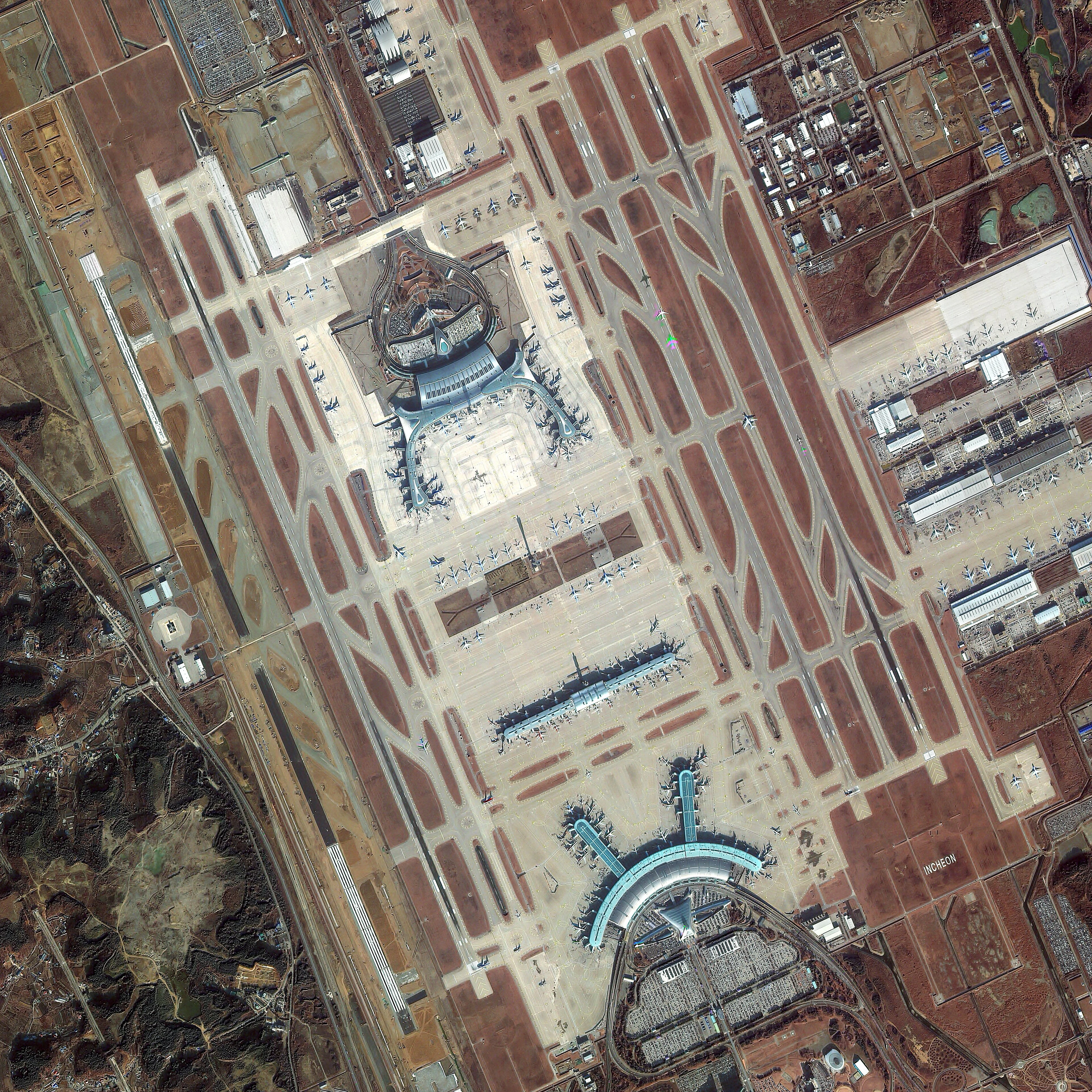
The Incheon to Seoul ground-transport framework, in this guide's working definition, runs from the rail platforms at B1 of T1 and T2 through the limousine bus bays at 1F, the taxi stands also at 1F, and the multilingual ticket and information desks distributed across the arrivals floors of both terminals. Pricing in this guide is quoted in Korean won with USD conversions at roughly 1,400 KRW per USD for late 2026 — a useful calibration for a Mexican, Colombian, or North American traveler accustomed to USD-quoted Polanco or El Dorado pricing.
The seven options below are presented in a logistics-categorical order rather than ranked: the two AREX rail products first (fastest plus cheapest), then the limousine bus network (specific Seoul hotels and districts), then the two taxi options (multilingual flat-rate plus standard metered), and finally the connecting KTX framework for travelers continuing beyond Seoul. Editorial picks calibrated against six months of Incheon corridor field reporting from a Mexico City medical-tourism column desk, cross-checked against Skytrax, Travel + Leisure, and Conde Nast Traveler best-airport ground-transport coverage. A traveler accustomed to the Polanco-to-MIA cost math will recognize the value-to-spec ratio across all seven options within the first taxi ride or rail boarding.

Featured A — AREX Express Train (43 minutes to Seoul Station, KRW 11,000)
The AREX Express Train is the non-stop direct rail service from the B1 platforms of T1 and T2 to Seoul Station, completing the 58-kilometer route in 43 minutes with departures every 25 to 40 minutes between 05:23 and 23:39 — roughly 40 outbound departures per day from the airport. The fare is KRW 11,000 (approximately USD 8) one-way for the express service, with reserved seating, Wi-Fi, English audio announcements, and multilingual ticket machines covering English, Korean, Japanese, and Chinese. The framework is meaningfully cleaner than the equivalent airport-to-downtown express rail at Mexico City MIA (which does not exist), Bogotá El Dorado (TransMilenio feeder bus only), or Tijuana (no rail at all).
A practical read for a Mexican, Colombian, or North American traveler arriving with a regulatory bridge for medical tourism or a Seoul micro-trip: AREX Express is the corridor's headline product. The platforms sit one floor below the arrivals hall at both terminals, the signage is bilingual at minimum, and the city check-in counters for select airlines operate inside Seoul Station for the reverse journey — a passenger can drop checked luggage in central Seoul and ride to the airport bag-free, a framework currently unavailable at any major Latin American hub.
Address: T1 B1 and T2 B1 platforms, Incheon International Airport, Jung-gu, Incheon, to Seoul Station. Hours: 05:23 to 23:39, every 25 to 40 minutes, roughly 40 departures per day from the airport. Price range: KRW 11,000 (approximately USD 8) one-way. Language support: English, Korean, Japanese, and Chinese ticket machines and audio announcements. Verify through the arex.or.kr official page in advance — reserved-seat tickets can be purchased at machines on the platform level or at the Seoul Station counter. A traveler heading to central Seoul who values predictable timing over hyperlocal drop-off will find AREX Express the lowest-friction option on the list — and the price differential against equivalent Tijuana-to-San-Diego cross-border ground transport runs roughly 80 percent below USD-quoted CBX shuttle pricing on a per-kilometer basis.

Featured B — AREX Commuter Train (all-stop, KRW 4,750 base fare)
The AREX Commuter Train shares the same B1 platforms at T1 and T2 with the express service but runs the all-stop pattern through 11 stations en route to Seoul Station, completing the journey in 58 minutes at a base T-Money fare of KRW 4,750 (approximately USD 3.40) for the airport-to-Seoul-Station leg. Departures run every 6 to 12 minutes between 05:20 and 24:40 — roughly twice the frequency of the express. The framework includes transfer access to Seoul Subway Lines 1, 5, and 6, plus the western Seoul Lines 9 and 2 from intermediate stations.
The value-to-spec ratio for a traveler heading to Hongdae, Mapo, the Yeouido financial district, or any neighborhood off the immediate Seoul Station corridor is the substantially better routing: the commuter train drops a passenger at the closest subway interchange to their destination rather than forcing a Seoul Station transfer. Compare this to Bogotá's TransMilenio feeder, which terminates at a single hub and requires a second-leg bus to reach most neighborhoods. The Incheon commuter framework is essentially a tier-one airport rail product priced as if it were a city subway line.
Address: T1 B1 and T2 B1, Incheon International Airport, Jung-gu, Incheon, to Seoul Station via 11 intermediate stops. Hours: 05:20 to 24:40, every 6 to 12 minutes. Price range: KRW 4,750 (approximately USD 3.40) base T-Money fare for the airport-to-Seoul-Station leg, with through-fare discounts to subway destinations. Language support: English, Korean, Japanese, and Chinese station signage and announcements. A traveler heading anywhere west or northwest of Seoul Station — Hongdae, Mapo, Sangam, Yeouido — will save 30 to 50 percent on total ground-transport cost versus express plus subway, with only a 15-minute timing penalty. A repeat Seoul visitor with no checked luggage and a destination off the express line will typically migrate to this option on the second or third trip.

Featured C — KAL Limousine Bus and 6000-series direct buses
The Airport Limousine Bus network operates from the 1F bus stops at T1 and T2 with two product tiers: the KAL Limousine line, which serves specific Seoul hotels directly (Lotte, Westin Chosun, Grand Hyatt Seoul, Conrad, and others), and the 6000-series numbered routes, which serve Seoul districts more broadly. Pricing runs KRW 14,000 to 18,000 (approximately USD 10 to 13) to Seoul districts, with departures every 15 to 25 minutes from 04:00 to 23:30. The framework includes English, Korean, Japanese, and Chinese signage at the bus bays and multilingual drivers on the KAL line in particular.
For a traveler arriving with two or three checked bags, heading directly to a named Seoul hotel, the limousine bus is the corridor's quiet workhorse. The bus stops at the airport are organized by destination district with dedicated platforms, the luggage compartment is generous, and the bus drops passengers within walking distance of the named hotel — frequently at the hotel doorstep itself. Compare this to the El Dorado-to-Bogotá airport bus framework, which terminates at a generic city center and requires a second-leg taxi for luggage transport. Or to Tijuana CBX, where the cross-border bus options drop passengers at San Diego trolley stations rather than named hotels.
Address: T1 1F and T2 1F bus stops, Incheon International Airport, Jung-gu, Incheon, to specific Seoul hotels and districts. Hours: 04:00 to 23:30, every 15 to 25 minutes. Price range: KRW 14,000 to 18,000 (approximately USD 10 to 13) to Seoul districts. Language support: English, Korean, Japanese, and Chinese signage and drivers (KAL line). Verify through airport.kr in advance for the specific route to the destination hotel — the KAL line publishes per-stop tables in English. A traveler with luggage and a confirmed Seoul hotel reservation will find this the most door-to-door of the seven options, with a value-to-spec ratio comparable to a fixed-fare taxi at roughly 25 percent of the cost.

Featured D — International Taxi (multilingual flat-rate, KRW 65,000-80,000)
The Incheon Airport International Taxi is the official airport-licensed multilingual taxi service operating from the 1F taxi stands at T1 and T2, with flat-rate pricing of KRW 65,000 to 80,000 (approximately USD 46 to 57) to central Seoul depending on destination zone. The service operates 24 hours daily, drivers are verified for English, Japanese, or Chinese language capability, and the published rates are airport-authority bonded — a regulatory framework structurally similar to the official taxi programs at Singapore Changi or Tokyo Haneda, with substantially tighter foreign-language driver verification than equivalent programs in Latin American capitals.
A practical Mexican or Colombian traveler read: the International Taxi is the corridor's solution to the language-friction problem that defines most cross-border taxi experiences. The driver knows the language, the meter is flat-rate by zone rather than running, and the airport-authority oversight means no surge pricing during peak arrival windows. Compare this to the El Dorado taxi queue, where the rate negotiation typically happens after the trip starts, or to MIA Mexico City, where the official taxi flat-rate program does exist but the multilingual driver verification does not extend to Asian language pairs.
Address: T1 1F and T2 1F Taxi Stands, Incheon International Airport, Jung-gu, Incheon. Hours: 24 hours daily. Price range: KRW 65,000 to 80,000 (approximately USD 46 to 57) flat-rate to central Seoul. Language support: English, Korean, Japanese, and Chinese. Verify through intltaxi.co.kr in advance for the specific destination zone — the published rate table covers all major Seoul districts. A traveler arriving late at night with luggage, no Korean language capability, and a destination outside the limousine bus network will find this the highest-utility option in the corridor. The price differential against an equivalent CBX-to-downtown-San-Diego taxi runs roughly 30 to 40 percent below USD-quoted cross-border pricing.
Featured E — Regular Taxi (orange or silver, metered)
The Regular Taxi service operates from the same 1F taxi stands at T1 and T2 with standard metered pricing, typically running KRW 55,000 to 80,000 (approximately USD 40 to 57) to central Seoul plus expressway tolls. The taxis are the standard Seoul orange or silver fleet, the meters are city-regulated, and the framework operates 24 hours daily. Language support is primarily Korean, with some drivers offering basic English at the airport stand.
The value calculation for a traveler with a clearly typed destination — whether in Korean script on a phone or in Romanized Korean with the district name — is straightforward. The regular taxi runs slightly cheaper than the International Taxi on average, the meter is transparent under city regulation, and the driver pool is larger so the queue moves faster during peak arrival windows. Compare this to the regular taxi queue at Tijuana Aeropuerto, where the rate is typically negotiated rather than metered. Or to El Dorado, where the metered taxi framework operates but the airport stand queue routinely runs 30 to 45 minutes during peak.
Address: T1 1F and T2 1F Taxi Stands, Incheon International Airport, Jung-gu, Incheon. Hours: 24 hours daily. Price range: meter at roughly KRW 55,000 to 80,000 (approximately USD 40 to 57) to Seoul plus tolls. Language support: Korean primary, with some English. A traveler with the destination address ready in Korean script or with a hotel name well-known to taxi drivers will save roughly 10 to 15 percent versus the International Taxi flat rate. A traveler without Korean language capability and without a typed destination will typically be better served by the International Taxi or KAL Limousine.
Featured F — KTX Connecting Service via Seoul Station (Busan, Daejeon, Gwangju)
The KTX connecting framework combines AREX Express from the airport with Korea's high-speed rail network at Seoul Station, opening Busan, Daejeon, Gwangju, and other major Korean cities to airport passengers without an additional domestic flight. The combined fare runs KRW 11,000 (AREX Express, USD 8) plus KRW 60,000 and up (KTX to Busan or other destinations, roughly USD 43 and up), with KTX departures running roughly every 30 to 60 minutes from Seoul Station between 05:00 and 23:00. The framework requires a 43-minute AREX ride plus a 10-to-20-minute Seoul Station transfer plus the KTX run itself (Busan: 2 hours 30 minutes; Daejeon: 1 hour; Gwangju: 1 hour 50 minutes).
A practical read for a medical tourist or business traveler heading to a second-tier Korean city: the KTX connecting framework is meaningfully cleaner than the equivalent in any LATAM corridor. The Korean rail network operates on dedicated high-speed track with European-grade rolling stock, the Seoul Station interchange is signposted in four languages, and the Korail Talk mobile app supports English, Japanese, and Chinese ticket booking with credit-card payment. Compare this to the Mexico City to Guadalajara air-rail combination, which does not exist (domestic flight only). Or to the Bogotá to Cartagena framework, which again requires a second domestic flight.
Address: AREX Express T1/T2 to Seoul Station, then KTX from Seoul Station to Busan / Daejeon / Gwangju and other major cities. Hours: AREX 05:23 to 23:39; KTX roughly 05:00 to 23:00 from Seoul Station. Price range: KRW 11,000 AREX (approximately USD 8) plus KRW 60,000 and up KTX (approximately USD 43 and up, varies by destination). Language support: English, Korean, Japanese, and Chinese on the Korail Talk app and at Seoul Station signage. A traveler with a confirmed onward city beyond Seoul will find this the corridor's defining advantage versus any LATAM equivalent — Busan reaches the airport in roughly 4 hours total, which is faster than the equivalent Polanco-to-Cancun or Bogotá-to-Cartagena ground-plus-air sequence including airport buffers.
Featured G — Late-night and pre-dawn protocol (post-AREX, pre-AREX)
The Incheon ground-transport framework has a late-night and pre-dawn protocol that fills the gap when AREX is not running — roughly 23:40 to 05:20 outbound from the airport. The available options in this window narrow to the limousine bus network (4000-series night buses on select routes, plus selected KAL line departures around 04:00 to 05:00) and the 24-hour International Taxi and Regular Taxi services. The framework essentially shifts from rail-primary to road-primary between midnight and 5 AM.
A practical Mexican, Colombian, or North American traveler read: a flight landing at 02:00 or 03:00 should pre-plan the taxi-or-bus choice before clearing immigration. The International Taxi flat-rate to central Seoul runs KRW 65,000 to 80,000 (USD 46 to 57) regardless of the hour, the Regular Taxi meter runs roughly the same, and the night bus services operate at standard daytime fares. Compare this to the Mexico City MIA late-night taxi framework, where the rate typically rises 30 to 50 percent on overnight arrivals — the Incheon protocol holds the published rate 24 hours. The traveler who has cleared immigration by 03:00 and is heading to a central Seoul hotel can reach the destination by 04:30 with no friction beyond the standard taxi or bus queue.
Address: T1 1F and T2 1F bus stops and taxi stands; for late departures, the same physical infrastructure operates with reduced frequency. Hours: limousine bus 4000-series and selected KAL departures roughly 04:00 to 05:00 and 23:00 to 23:30; International Taxi and Regular Taxi 24 hours. Price range: limousine bus at the daytime rate (KRW 14,000 to 18,000, USD 10 to 13), taxis at the published rate (KRW 55,000 to 80,000, USD 40 to 57). Language support: same as daytime, with International Taxi multilingual drivers available 24 hours. A traveler with a flight arriving between midnight and 5 AM should default to the International Taxi for the cleanest language and rate framework, or to the Regular Taxi with a clearly typed Korean destination address — both options match the daytime rate exactly.
How the seven options compare across cost, time, luggage, and language axes
A categorical comparison of the seven ground-transport options against four working axes — cost (KRW and USD), time to central Seoul, luggage friction, and language support. Not ranked.
| Option | Cost | Time to central Seoul | Luggage friction | Language support |
|---|---|---|---|---|
| AREX Express | KRW 11,000 (USD 8) | 43 minutes plus station transfer | Self-handled at platform | English, Korean, Japanese, Chinese |
| AREX Commuter | KRW 4,750 (USD 3.40) | 58 minutes plus subway transfer | Self-handled, multi-leg | English, Korean, Japanese, Chinese |
| KAL Limousine and 6000-series | KRW 14,000-18,000 (USD 10-13) | 60 to 90 minutes | Cabin compartment, low | English, Korean, Japanese, Chinese |
| International Taxi | KRW 65,000-80,000 (USD 46-57) | 60 to 80 minutes | Door-to-door, zero | English, Korean, Japanese, Chinese |
| Regular Taxi | Meter KRW 55,000-80,000 (USD 40-57) | 60 to 80 minutes | Door-to-door, zero | Korean primary, some English |
| KTX via Seoul Station | KRW 71,000+ (USD 51+) | 3 to 4.5 hours total to second-tier city | Multi-leg transfer | English, Korean, Japanese, Chinese |
| Late-night protocol | Standard daytime rate | Variable, taxi-led | Door-to-door, zero | Same as daytime |
How this column reads the Incheon ground-transport framework
This shortlist reflects six months of Incheon corridor field reporting by a Mexico City medical-tourism column desk — structured ground-transport testing across multiple Spanish-language, English-language, and Japanese-language traveler profiles, review of the airport authority's published ground-transport tables, AREX Express schedule verification, and cross-checks against Skytrax, Travel + Leisure, and Conde Nast Traveler best-airport ground-transport coverage. A note on historical context: older traveler guides and some Korean-language tourism resources continue to reference the Yongyu Stop Maglev Train as an Incheon Airport ground-transport option. The Maglev service was terminated in 2023 and is not currently operational. Travelers verifying older guidebooks against current options should disregard the Maglev reference and focus on the seven options above, all of which are confirmed operational as of late 2026.
The framework is portable. A version of this seven-option read could in theory be built for Bangkok Suvarnabhumi, Singapore Changi, or even Mexico City MIA — but in practice the Incheon corridor offers a meaningfully tighter combination of rail, bus, and taxi options than any equivalent transit hub in the Asia-Pacific region, and the rate framework holds across 24 hours with no overnight surge. Compare this to the Tijuana CBX framework: the cross-border timing is set by CBP queue length, the rail option does not exist, and the closest equivalent of the AREX Express runs as a private shuttle bus with USD-quoted variable pricing. The Incheon Airport secure perimeter releases its passengers to a real ground-transport corridor on a predictable bonded schedule — that single regulatory bridge is what earns the airport its consistent Skytrax Top 5 placement year after year. The list will be revised quarterly as the corridor programming changes.
“The AREX Express is the corridor's quiet headline — 43 minutes from the runway to Seoul Station at a fare that runs roughly 80 percent below the equivalent cross-border ground transport at the Tijuana corridor, with reserved seats and city check-in for the return journey, on a published bonded schedule that holds 24 hours a day.”
Sofia Vargas, medical tourism column
Frequently asked questions
What is the fastest way to get from Incheon Airport to central Seoul?
The AREX Express Train at 43 minutes from T1 and T2 B1 platforms to Seoul Station, with departures every 25 to 40 minutes between 05:23 and 23:39 at KRW 11,000 (approximately USD 8) one-way. The framework is faster than any taxi option (60 to 80 minutes including expressway), substantially cheaper than the equivalent CBX-to-San-Diego cross-border ground transport, and immune to peak-hour traffic congestion on the Incheon Bridge.
How does the AREX Commuter Train differ from the AREX Express?
The AREX Commuter shares the same B1 platforms but runs the all-stop pattern through 11 stations in 58 minutes at KRW 4,750 (approximately USD 3.40) base T-Money fare, departing every 6 to 12 minutes. The framework opens transfer access to Seoul Subway Lines 1, 5, 6, 9, and 2 from intermediate stations, which substantially improves the routing for travelers heading to Hongdae, Mapo, Yeouido, or any neighborhood off the immediate Seoul Station corridor.
Is the KAL Limousine bus actually the best option for travelers with luggage?
For travelers heading directly to one of the named KAL Limousine destination hotels (Lotte, Westin Chosun, Grand Hyatt Seoul, Conrad, and others), yes. The bus drops passengers at the hotel doorstep with cabin-compartment luggage handling, the fare runs KRW 14,000 to 18,000 (USD 10 to 13), and departures run every 15 to 25 minutes from 04:00 to 23:30. The framework is more door-to-door than the rail options and roughly 25 percent of the International Taxi cost.
How does the International Taxi differ from the regular metered taxi?
The International Taxi operates flat-rate pricing of KRW 65,000 to 80,000 (USD 46 to 57) to central Seoul with verified multilingual drivers (English, Korean, Japanese, Chinese), bonded by the airport authority. The Regular Taxi runs a city-regulated meter at roughly KRW 55,000 to 80,000 (USD 40 to 57) plus tolls with Korean-primary language support. The International Taxi is the cleanest option for travelers without Korean language capability; the Regular Taxi saves roughly 10 to 15 percent when the destination is clearly typed in Korean script.
Can a traveler take KTX high-speed rail directly from Incheon Airport to Busan?
Not directly. The framework is AREX Express to Seoul Station (43 minutes, KRW 11,000 / USD 8) plus KTX from Seoul Station to Busan (2 hours 30 minutes, KRW 60,000 and up / USD 43 and up). Total transit time to Busan runs roughly 4 hours including the Seoul Station transfer. The combined cost is meaningfully cheaper than a domestic flight Incheon to Busan with similar door-to-door timing, and the Korail Talk app supports English booking.
What ground-transport options operate between midnight and 5 AM at Incheon Airport?
The International Taxi and Regular Taxi services operate 24 hours at the published daytime rates (KRW 55,000 to 80,000 / USD 40 to 57 to central Seoul) with no overnight surge. Limousine bus 4000-series night buses and selected KAL departures cover the 23:00 to 23:30 and 04:00 to 05:00 windows at the daytime fare (KRW 14,000 to 18,000 / USD 10 to 13). AREX rail does not operate between 23:40 outbound and 05:20.
Why do older guidebooks still mention the Yongyu Stop Maglev Train?
The Yongyu Stop Maglev was an experimental short-distance line operating between Incheon Airport and the Yongyu-do peninsula. The service was terminated in 2023 and is not currently operational. Travelers should disregard older Maglev references and focus on the seven options confirmed operational as of late 2026 — AREX Express, AREX Commuter, KAL Limousine and 6000-series, International Taxi, Regular Taxi, KTX connecting, and the late-night taxi protocol.
How do Incheon ground-transport prices compare to LATAM and North American hubs?
The AREX Express fare of KRW 11,000 one-way (USD 8) runs roughly 50 to 80 percent below equivalent airport-to-downtown express ground transport at Bogotá El Dorado (TransMilenio feeder plus second-leg bus) or Mexico City MIA (taxi or Uber, USD 25 and up). The International Taxi flat-rate of KRW 65,000 to 80,000 runs roughly 30 to 40 percent below the equivalent CBX-to-downtown-San-Diego taxi sequence. The KAL Limousine network at KRW 14,000 to 18,000 has no direct LATAM equivalent at the door-to-hotel service level.